IIHSA Events
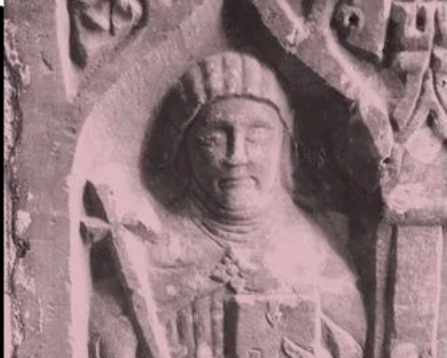
Rachel Moss, ‘Visualising the Cult of St Brigid of Ireland’
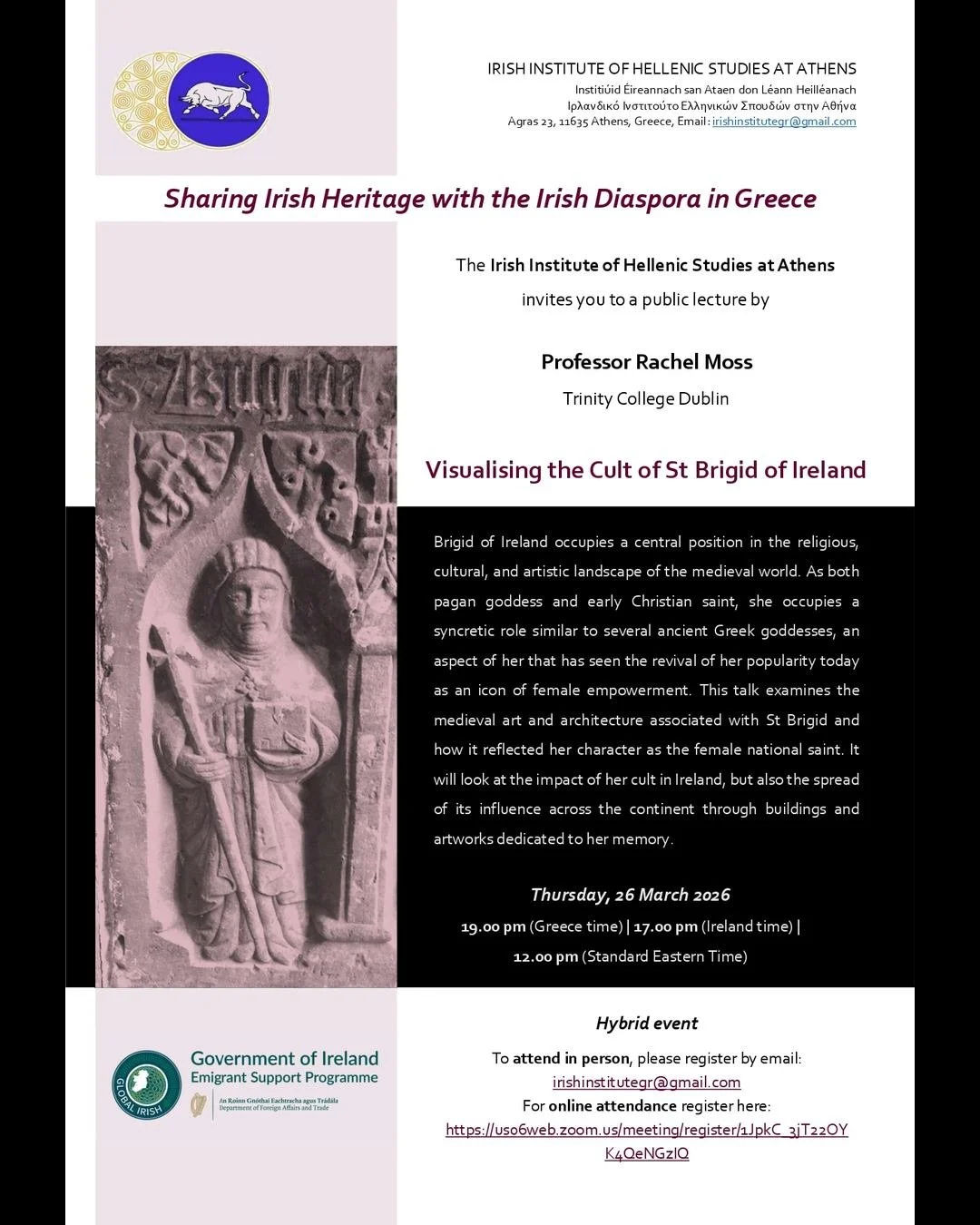
We are delighted to announce the launch our new initiative, “Sharing Ancient Irish Heritage with the Irish Diaspora in Greece.” With the generous support of the Embassy of Ireland in Greece, this new series of public events explores the rich history and culture of Ireland and aims to strengthen cultural ties between the Irish diaspora in Greece and their homeland, while also fostering a deeper interest in Irish heritage among the Greek public.
Our series opens with a lecture by Rachel Moss (Professor in the History of Art and Architecture at Trinity College Dublin) “Visualising the Cult of St Brigid of Ireland” on Thursday 26 March, 2026, 19:00 (Greece) | 17:00 (Ireland) | 12:00 (EST). Hybrid event.
The lecture will be followed by a discussion with the audience and a light wine reception.
To attend in person at our premises (Agras 23), please register by email: irishinstitutegr@gmail.com
For online participation, please register here: https://us06web.zoom.us/.../register/1JpkC_3jT22OYK4QeNGzIQ
We very much look forward to welcoming you
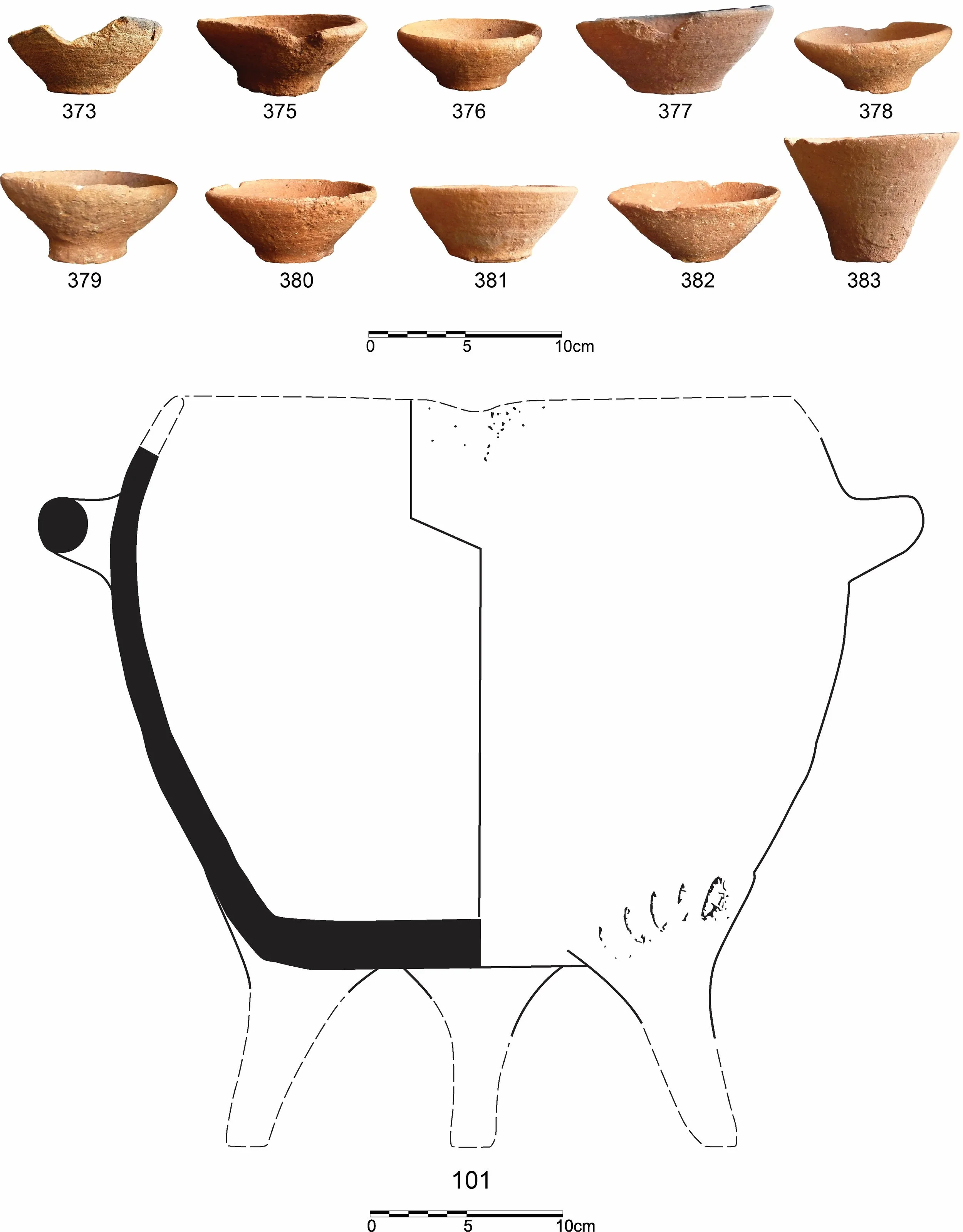
Natalie Abell, Households as hosts? Quantifying cups and cookpots to shed light on commensality at Bronze Age Ayia Irini, Kea
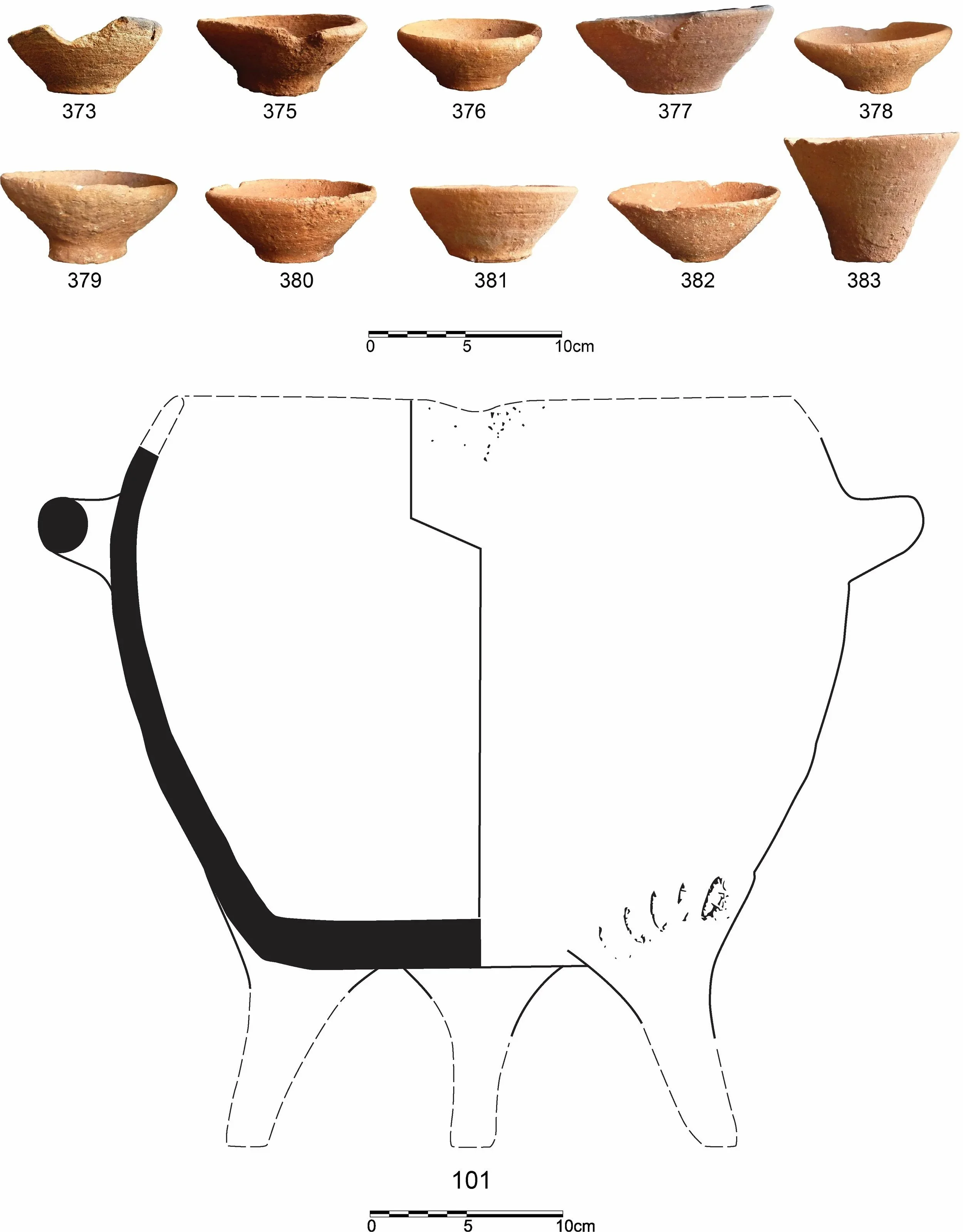
You are invited to an online lecture on Thursday February 19th, 2026 at 19.00 pm (Greek time) 17.00 pm (Ireland time), 12.00 pm (Standard Eastern Time) by Natalie Abell (University of Michigan), ‘Households as hosts? Quantifying cups and cookpots to shed light on commensality at Bronze Age Ayia Irini, Kea.’
Abstract: This study is a team project of Natalie Abell, Jami Baxley Craig, Lauren Alberti, and Christine Weber, presented by Natalie Abell.
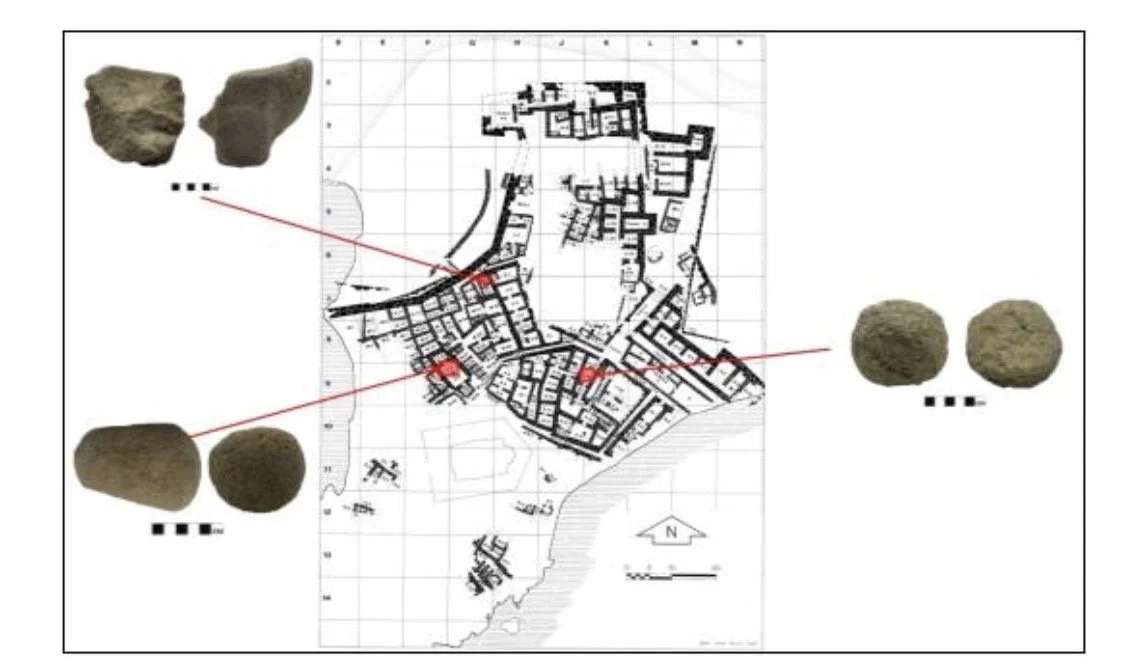
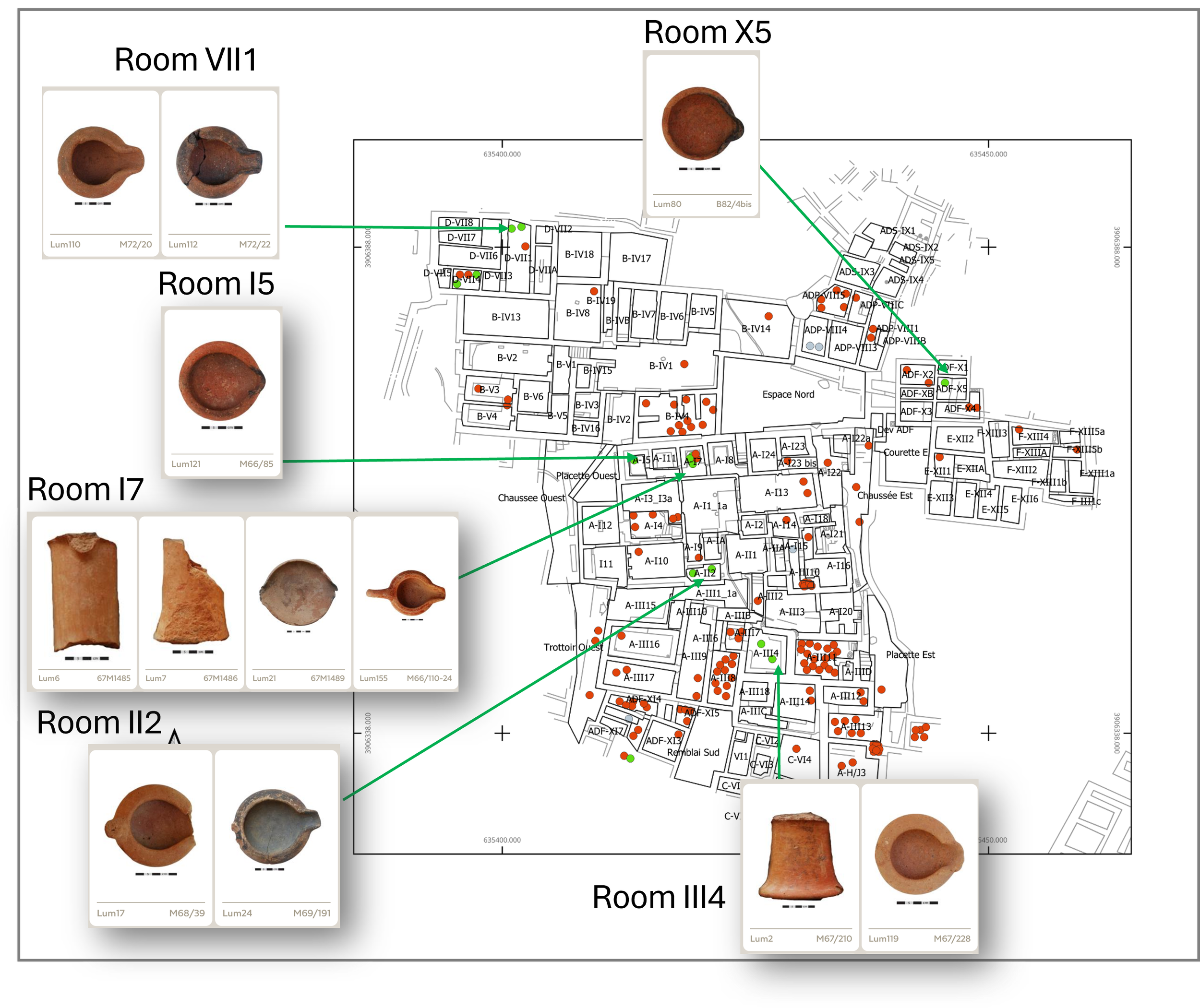
A recent re-evaluation of archival excavation documents from Bronze Age Ayia Irini on the Cycladic island of Kea has provided new data for the quantities of cooking and drinking equipment, namely tripod vessels and handleless cups, at the site. These vessels were present in many later MBA and earlier LBA deposits, mostly from in and around houses. Some of these deposits and houses contained very high numbers of handleless cups and/or tripod vessels (hundreds to thousands). These quantities seem to exceed even the most generous interpretation of the daily needs of household inhabitants, especially since the site itself probably housed a population of 500 or fewer people at its maximum extent. Although most studies of commensal activities in the Aegean focus on identifying primary feasting deposits, the evidence from Ayia Irini seems more likely to represent the stockpiling of commensal equipment by individual households for future events. Analysis of the assemblage of tripods and handleless cups from Ayia Irini, therefore, provides a new perspective on how local commensal practices were embedded in household activities, domestic economy, and ritual practice.
Please register here: https://us06web.zoom.us/meeting/register/PH32CjhlT7CAPaWDRabkaQ
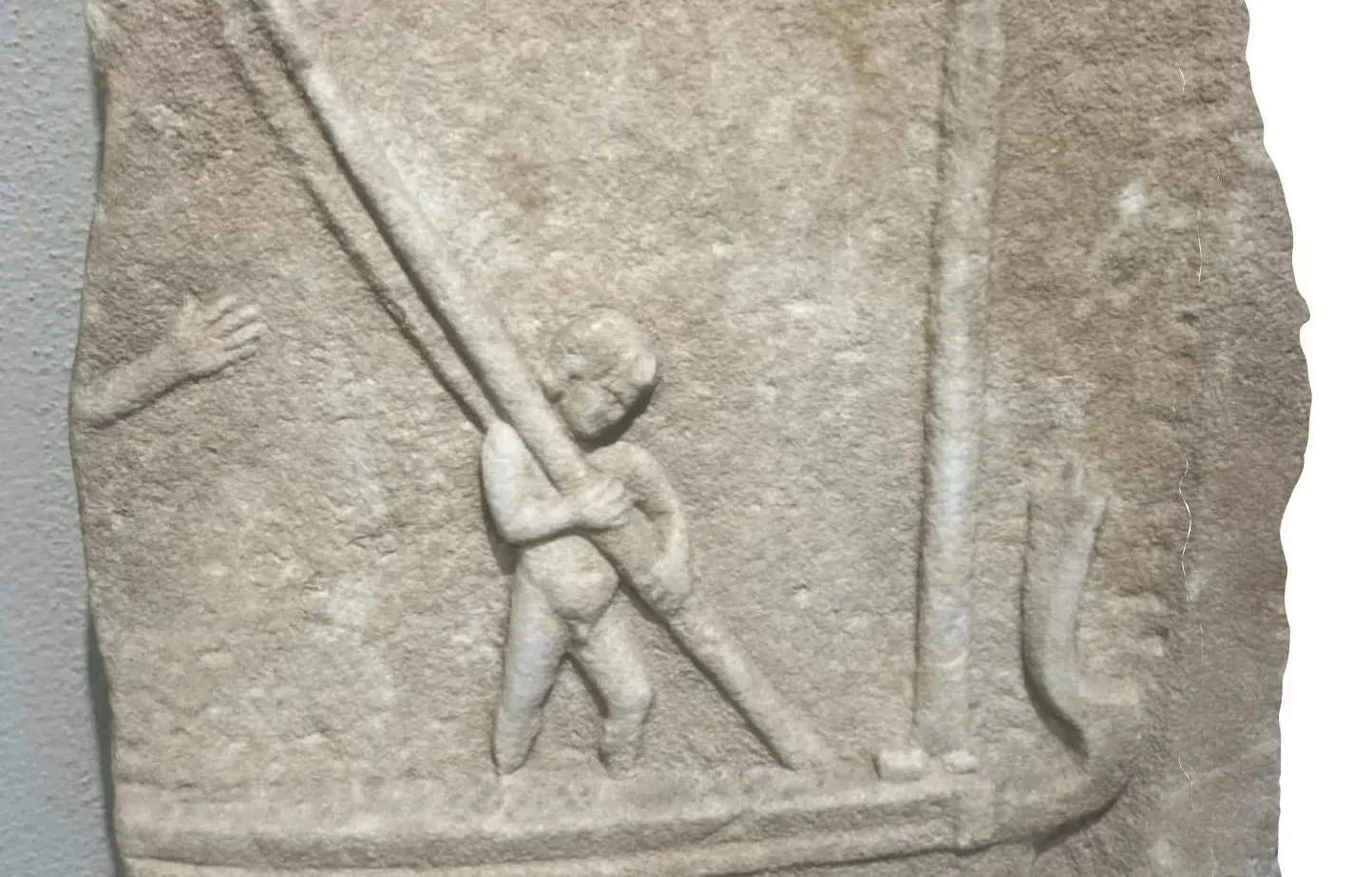
Dermot Grant ‘Illustrating the mobility of cults on trade networks and navigation routes in the central Aegean. Apollo and Artemis as a case study’
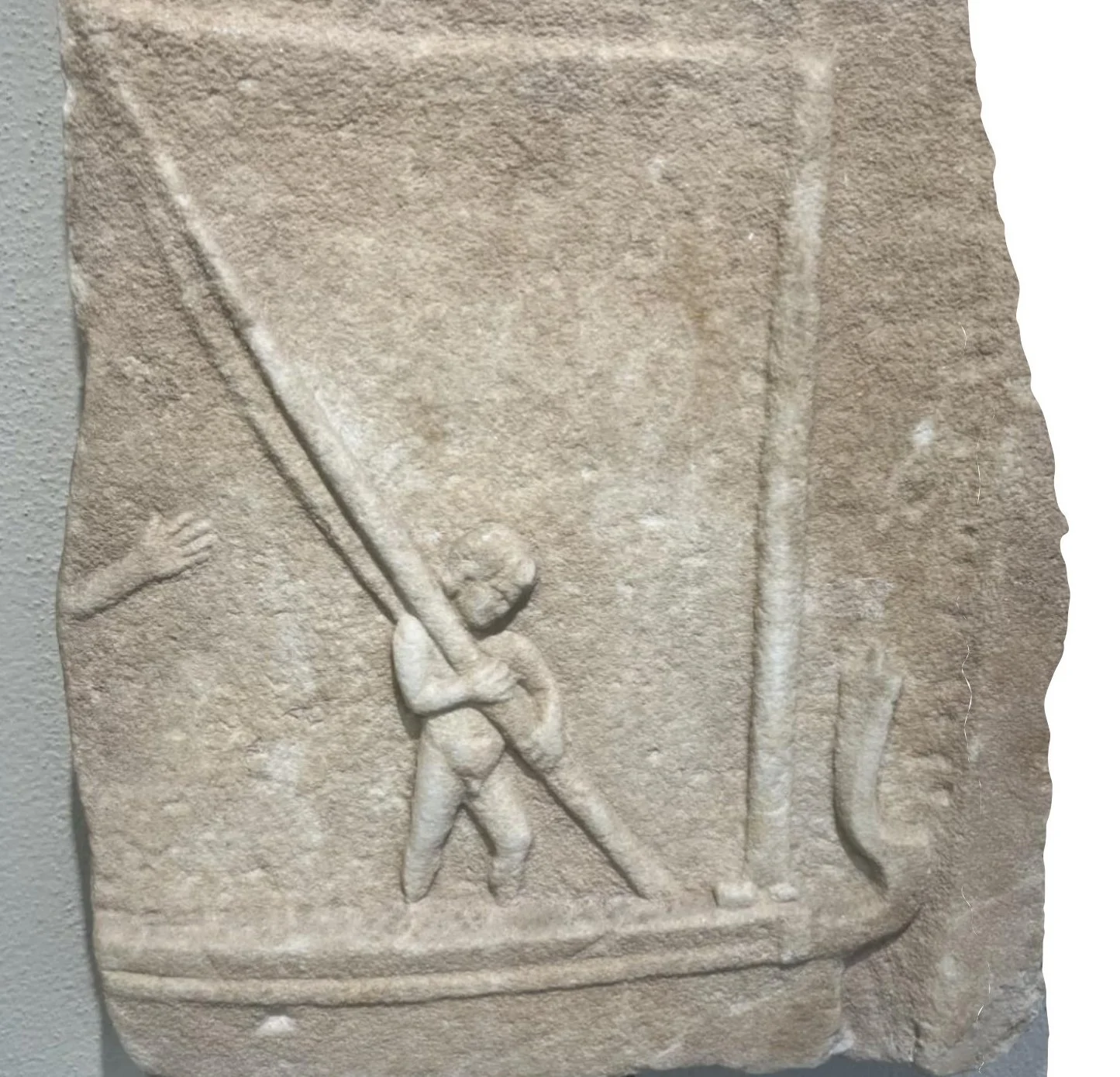
You are invited to an online lecture on Thursday January 15th 2026 at 19.00 pm (Greek time) 17.00 pm (Ireland time), 12.00 pm (Standard Eastern Time) by Dermot Grant (Trinity College Dublin) on Illustrating the mobility of cults on trade networks and navigation routes in the central Aegean. Apollo and Artemis as a case study.
Abstract: Maritime sanctuaries have been described as nodes of ‘seaborne connections supported by always evolving and adapting sets of myth and ritual, moving alongside actual goods and people’ (Kowalzig 2018, 95–95). Apollo and Artemis sanctuaries have a disproportionate presence across the Cyclades and to Chios and north to Skyros and Volos, and Artemis threading its way through the Euboean Gulf, although not necessarily with the same epithets. The diffusion of the Delia cults, with Apollo accompanying Artemis, are often venerated as parallel cults (Angliker 2022, 247). Using Apollo and Artemis sanctuaries in the Central Aegean as a case study, this presentation will attempt to identify the drivers of the mobility of the cults, including trade and navigation networks and within highly connected economic communities.
Cited bibliography
Angliker, E. (2022). Insights into the Cult and Apollo and Artemis at the Parian Sanctuaries. In E. Guillon, A. Latzer-Lasar, S. Lebreton, M. Luaces, F. Porzia, E. Rubens Urciuoli, J. Rupke, & C. Bonnet (eds), Naming and Mapping the Gods in the Ancient Mediterranean (Vol. 1, pp. 247–271). De Gruyter.
Kowalzig, B. (2018). Cults, Cabotage, and Connectivity. In C. Knappet (ed.), Maritime Networks in the Ancient Mediterranean World. Cambridge University Press.
Please register here: https://us06web.zoom.us/meeting/register/V02i2VzqQ_-wmCxyaWkCpw
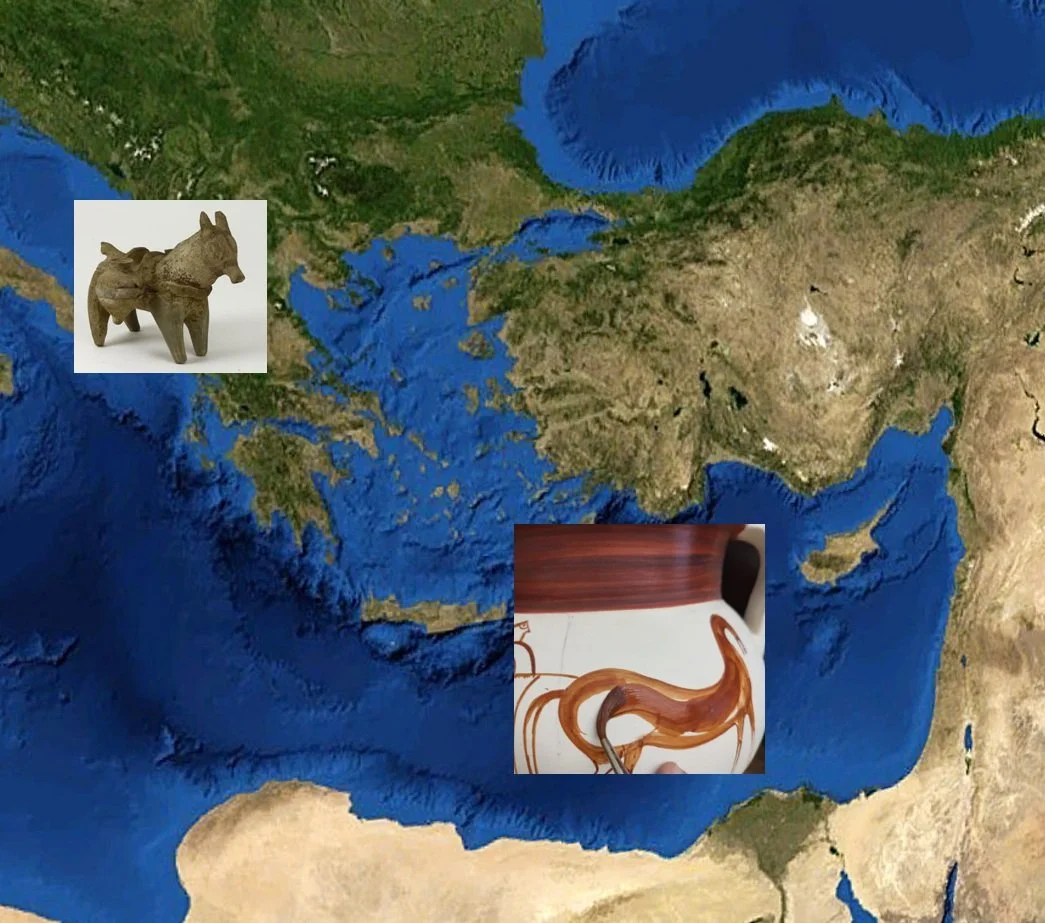
Dr Angelos Papadopoulos, ‘Access and Control: Inequality and Economic Power in the Late Bronze Age Aegean’
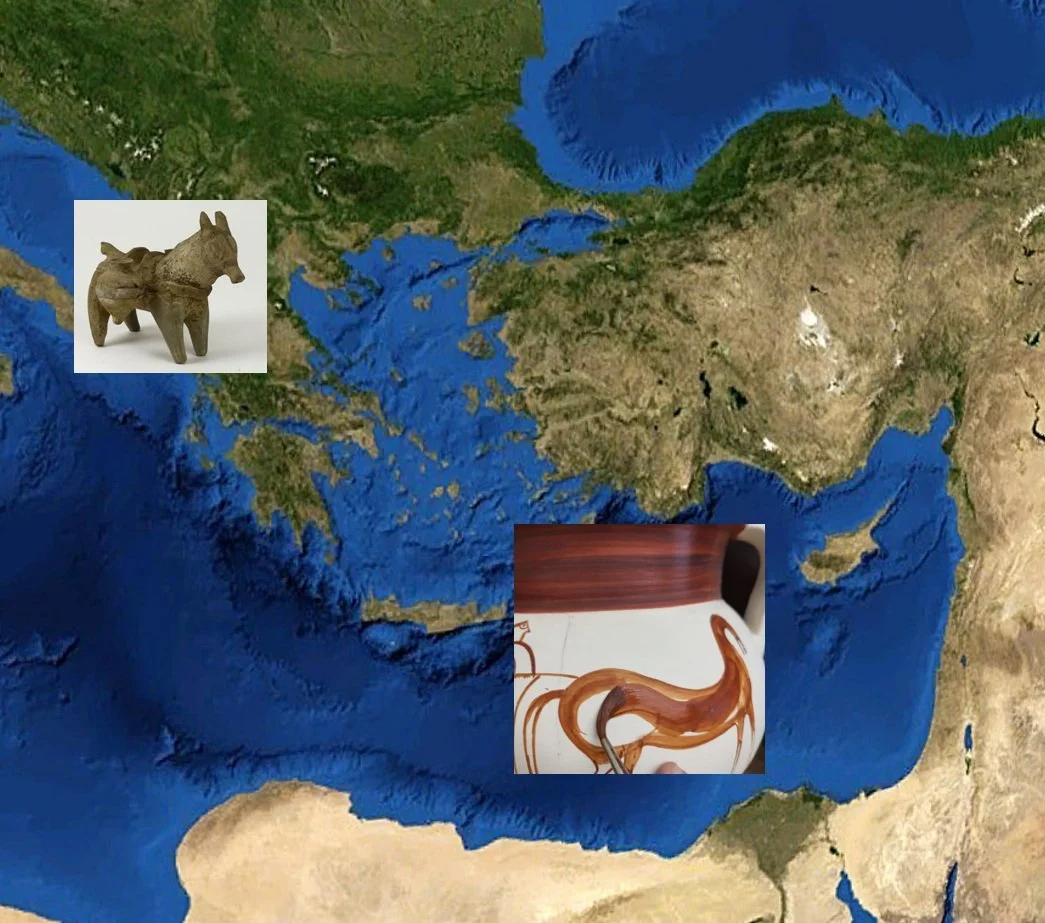
You are invited to a hybrid lecture on Thursday December 11th, 2025 at 19.00 pm (Greek time) 17.00 pm (Ireland time), 12.00 pm (Standard Eastern Time) by Dr Angelos Papadopoulos (College Year at Athens), on ‘Access and Control: Inequality and Economic Power in the Late Bronze Age Aegean’.
Abstract: In discussing Mycenaean trade, James Wright asked how the elites at Mycenae achieved domination (on the mainland and across the Aegean), suggesting that at least part of their power derived from controlling production and distribution. In addition, the idea that social inequality is fundamentally rooted in access to and control over resources forms the basis of this presentation. Here, “resources” include not only cultivable land, water, minerals, metals and clays, but also passages, bridges, safe anchorages and harbours that enabled mobility and exchange. The central hypothesis is that the groups who accessed or extracted these resources were not always the same as those who profited from their distribution. Furthermore, it is proposed that individuals such as merchants or warriors may have operated privately, at times beyond the supervision of state institutions like the palaces, offering an additional layer of inequality within the Late Bronze Age Aegean. Examples from the contemporary Eastern Mediterranean will be used to illustrate these dynamics.
For online attendance register here: https://us06web.zoom.us/meeting/register/6YfAdSI7SgiLkplsuR8pKA
To attend in person, please register by email:irishinstitutegr@gmail.com

Dr Shannon La Fayette Hogue, ‘Floor Plaster Production Technologies in the Palace of Nestor at Pylos’.
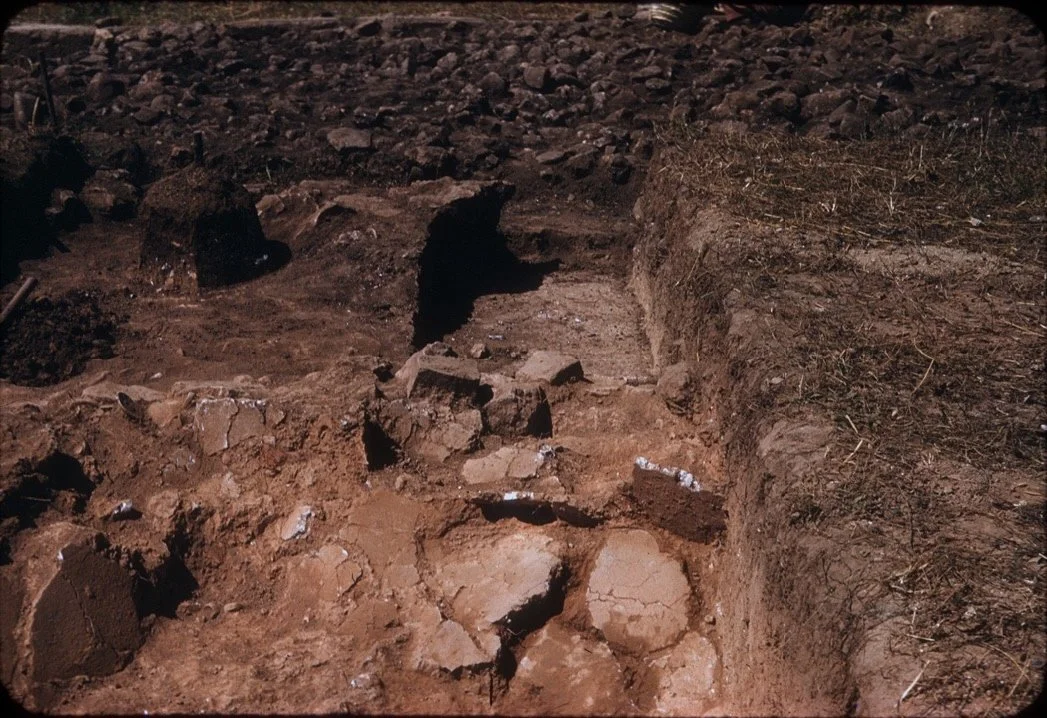
You are invited to an online lecture on Thursday November 13, 2025 at 19.00 pm (Greek time) 17.00 pm (Ireland time), 12.00 pm (Standard Eastern Time) by Dr Shannon LaFayette Hogue on ‘Floor Plaster Production Technologies in the Palace of Nestor at Pylos’.
Abstract: During the 1953 season, while supervising an excavation area in the Main Building of the Late Helladic IIIB Palace of Nestor at Pylos, Marion Rawson encountered substantial evidence of an upper floor collapse. Her documentation of the collapse contexts and collection of the plaster floor fragments that fell from the upper story form the basis for my new analysis of floor plaster production technologies at Pylos. This paper begins with a tour of the Main Building rooms whose excavation Rawson oversaw in 1953 and illustrates her remarkably consistent recording practices regarding the upper floor collapse. It turns then to observations regarding the floor plaster fragments, which on the surface presented a standardized appearance as polished, white pavements. Macroscopic fabric analysis, however, reveals that their internal fabric composition varied. Examples are presented to illustrate how certain fabric variations in the floor plaster indicate different choices made during the plaster production process. Rawson’s instincts to record and retain plain floor plaster yielded a body of evidence that is now contributing
Register here:
https://us06web.zoom.us/meeting/register/DxRTPO-xQAq503gk3NrtEg

Annual Lecture in Ireland: Dr. Evi Margaritis, ’Domesticity, craft production and ritual: changing patterns of human life in the 3rd millennium Aegean’
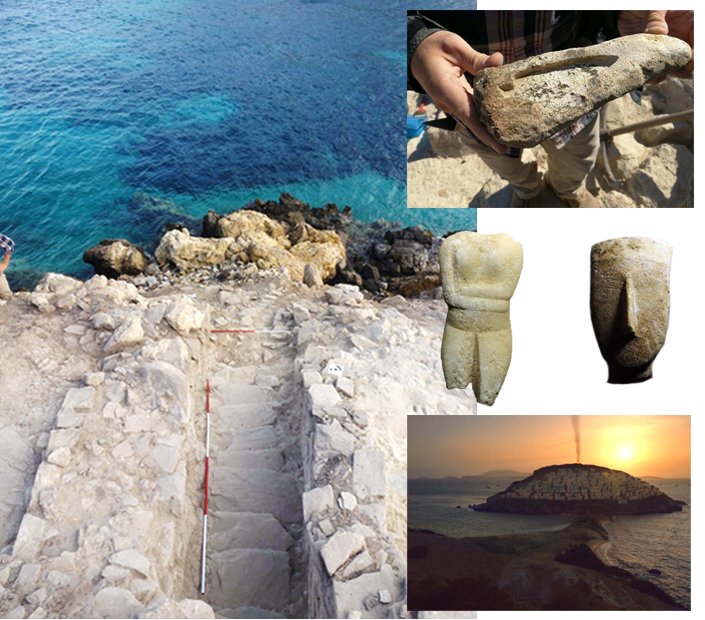
The Irish Institute of Hellenic Studies at Athens Annual Meeting in Ireland. We are delighted to welcome Dr. Evi Margaritis from the Cyprus Institute to deliver her lecture Domesticity, craft production and ritual: changing patterns of human life in the 3rd millennium Aegean, co-authored with Michael Boyd and Colin Renfrew.
This lecture is co-organised by the UCD School of Archaeology Bronze Age seminar series. The meeting will be in hybrid format.
In person: UCD School of Archaeology, Ardmore Annex in Room ARD-AA1 in University College Dublin with a reception to follow, generously sponsored by Odaios Foods.
Please register via Eventbrite to attend online.