IIHSA Events
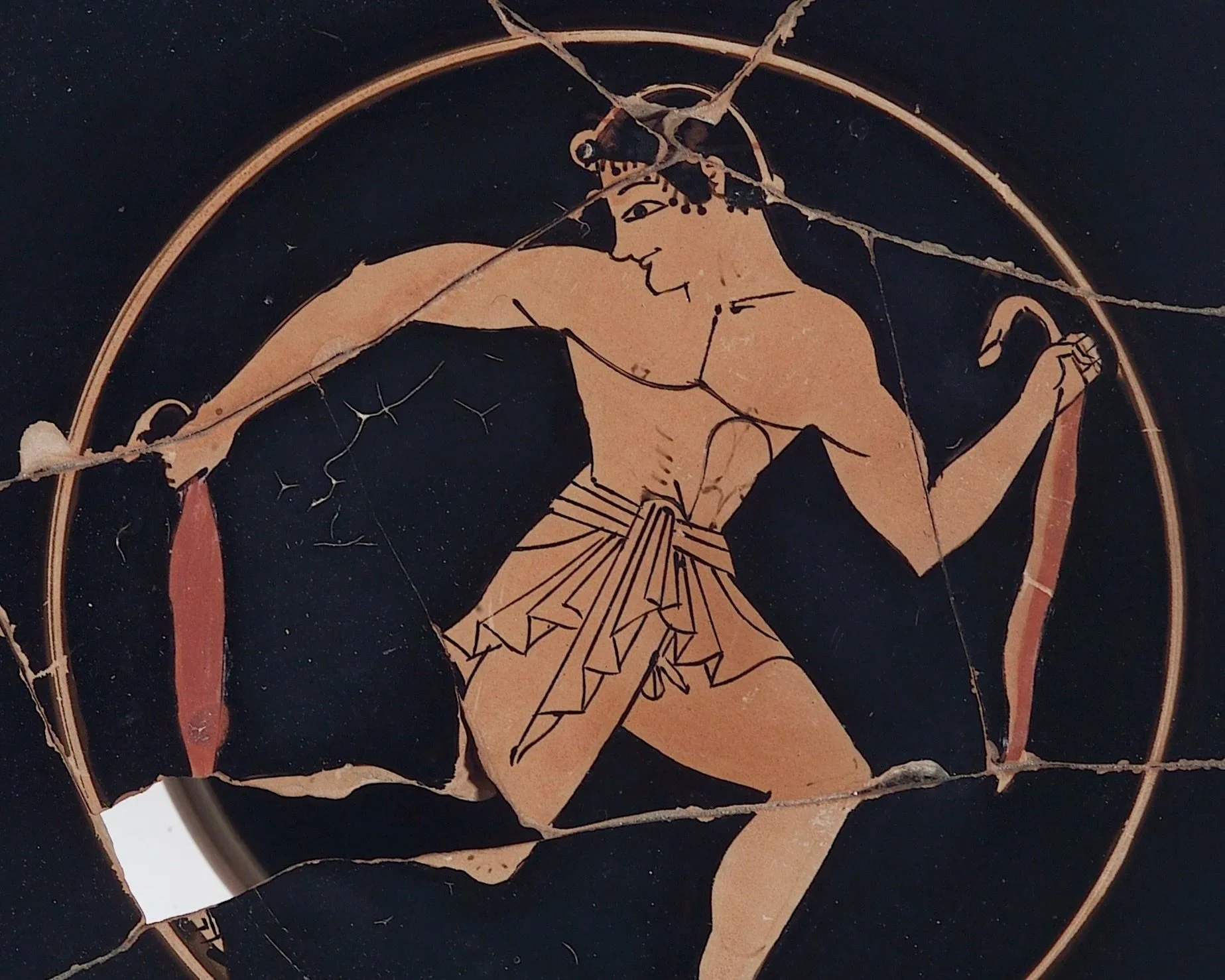
Seminar Series, Domestic Life in the Ancient World: Kathleen Lynch, "No Plates or Bowls in the Cupboard: How did Archaic and Classical Athenians Set their Table"
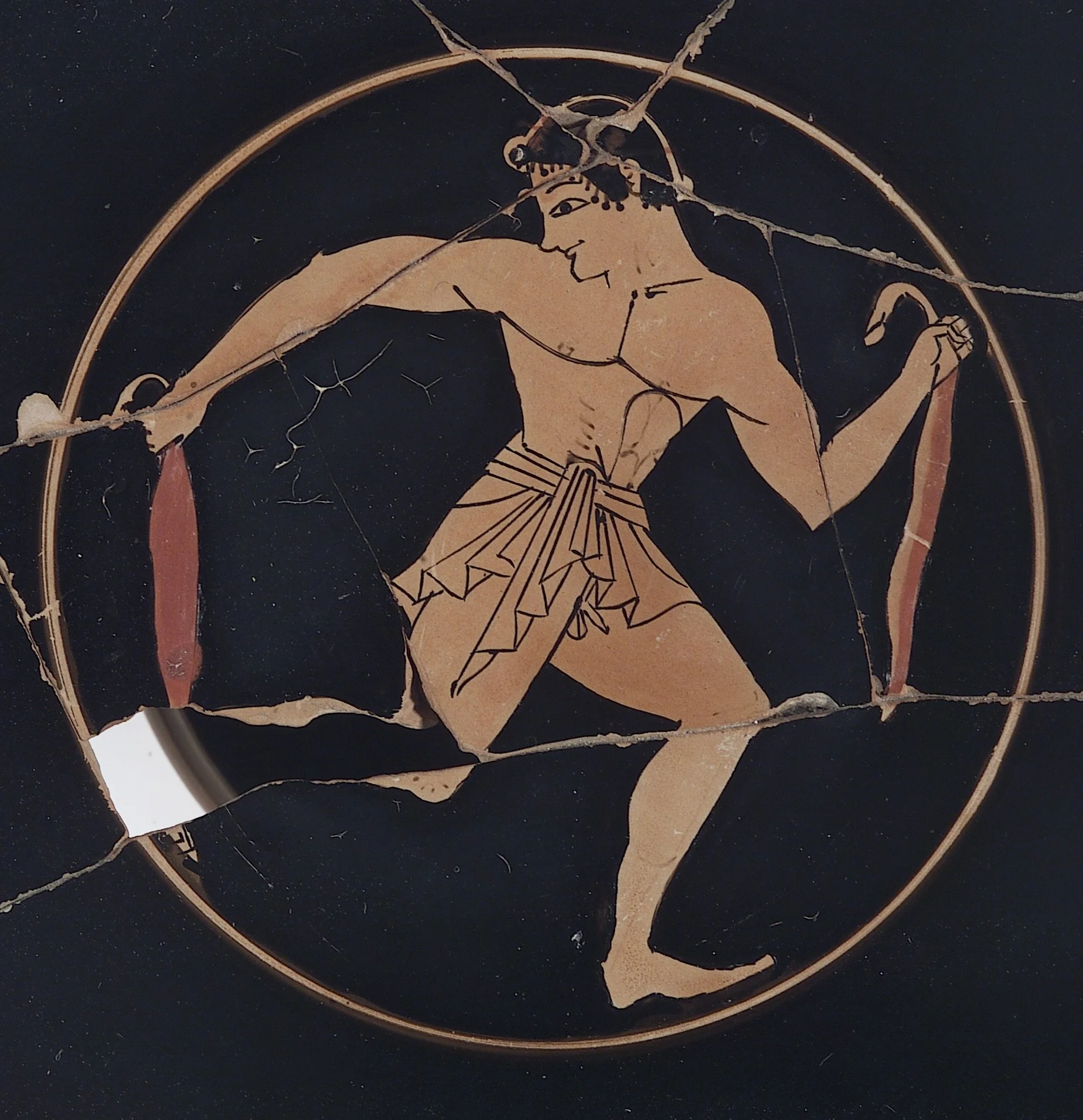
You are invited to our 2025-26 Seminar series on ‘Domestic Life in the Ancient World’. This will be an hybrid event on Monday April 27th, 2026 at 19.00 pm (Greece time), 17.00 pm (Ireland time), 12.00 pm (EST), by Professor Kathleen Lynch (Professor of Classical Archaeology, University of Cincinnati), on "No Plates or Bowls in the Cupboard: How did Archaic and Classical Athenians Set their Table".
Abstract
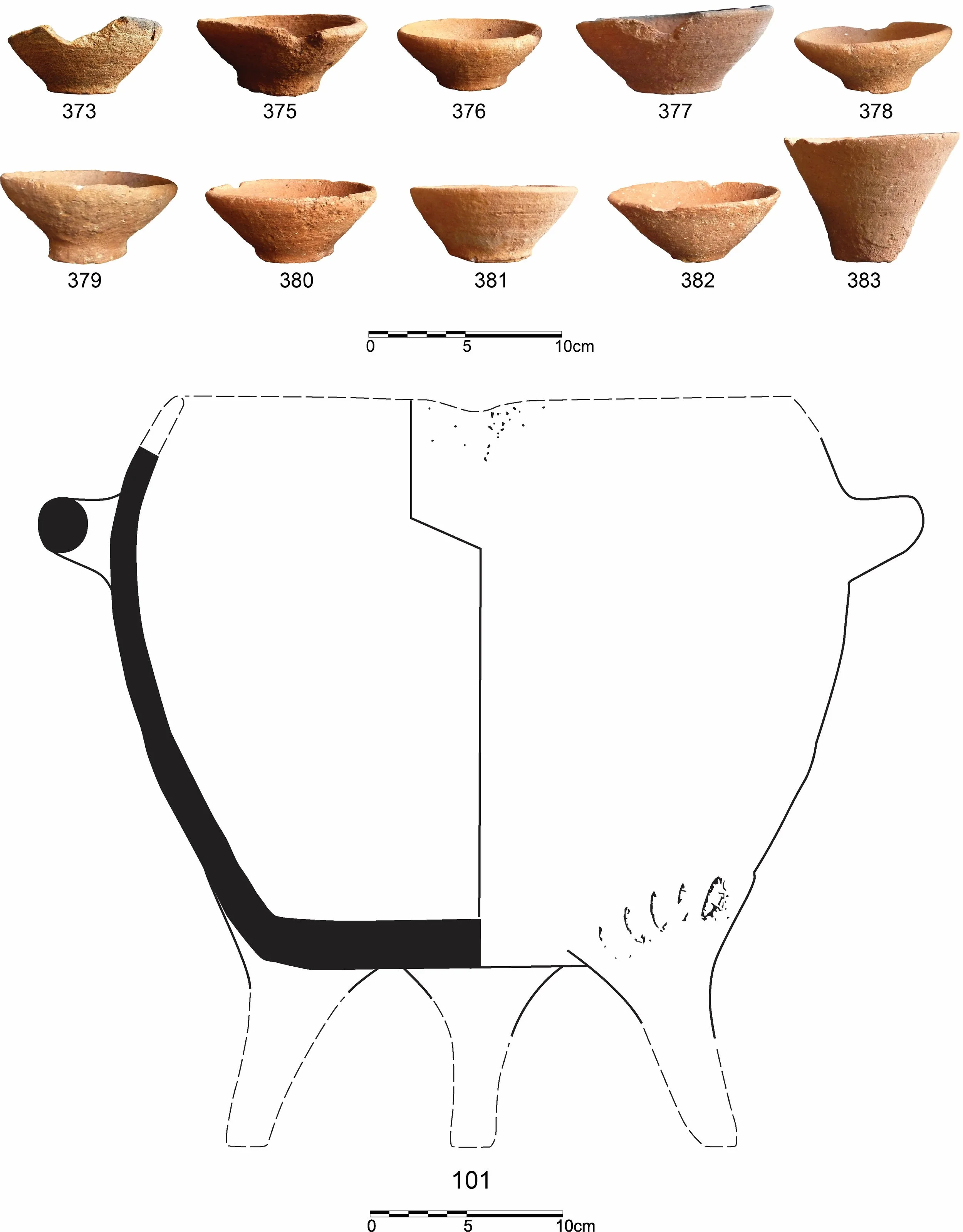
Athenian potters of the Archaic and early Classical periods produced extraordinary ceramic vessels, often decorated with figures, to facilitate the symposium, the communal wine-drinking activity. In contrast, they did not produce dishes and bowls for food consumption. This talk will explore this conundrum: we know ancient Athenians ate food - we have their cooking pots - but why did the potters not create equally complex sets of pottery for food consumption as they did wine consumption? The contrast being eating and drinking wine illuminates the importance of wine in cultural definition and may reflect and unusual confidence in the food supply.
Further information:
The IIHSA Seminar Series for 2025–2026 will explore various aspects of household life in the ancient world, including labour and production, gender roles, childhood, food practices, and broader issues of social structure and negotiation across different periods and regions. Designed for graduate students and anyone interested in engaging deeply with a topic beyond the traditional lecture format, the series offers participants an opportunity to discuss and exchange ideas directly with experts in the field. Each seminar features a 30–40 minute presentation followed by an open discussion, co-led by the Assistant Director, to encourage active participation and dialogue. A brief bibliography is provided for those who wish to familiarize themselves with the seminar topic.
Bibliography
Douglas, Mary. 1997 [1972]. "Deciphering a Meal." In Food and Culture: A Reader, edited by C. Counihan and P. Van Esterik, 2° edition, 36-54.
Hastorf, Christine A. 2017. The Social Archaeology of Food: Thinking about Eating from Prehistory to the Present, Cambridge.
Lynch, K. M. 2011. The Symposium in Context: Pottery from a Late Archaic House near the Athenian Agora, Hesperia Supplement 46, Princeton, N.J.
Lynch, K. M. 2015. "Drinking Cups and the Symposium at Athens in the Archaic and Classical Periods," in Cities Called Athens, ed. K. Daly and L. Ricardi, Lewisburg, PA, pp. 231-271.
For online attendance please register here:
https://us06web.zoom.us/meeting/register/jASQ5mZBS0O29Sw9E2DDSw
To attend in person, please register by email: irishinstitutegr@gmail.com
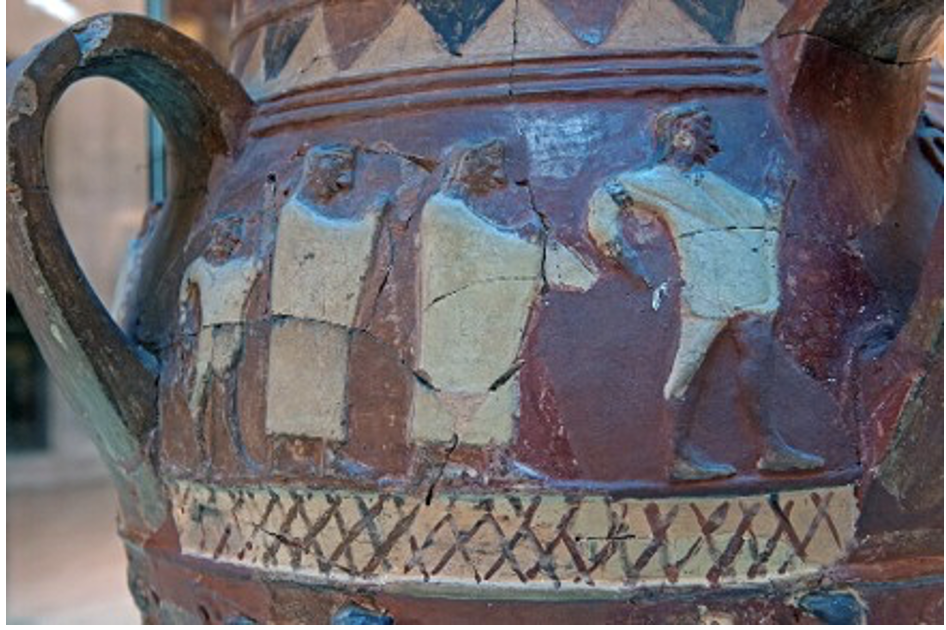
Seminar Series, Domestic Life in the Ancient World: Kostas Kopanias, "Gender at Home and Before the Law: Domestic Roles in Hittite Legal Texts and the Homeric Epic Tradition."
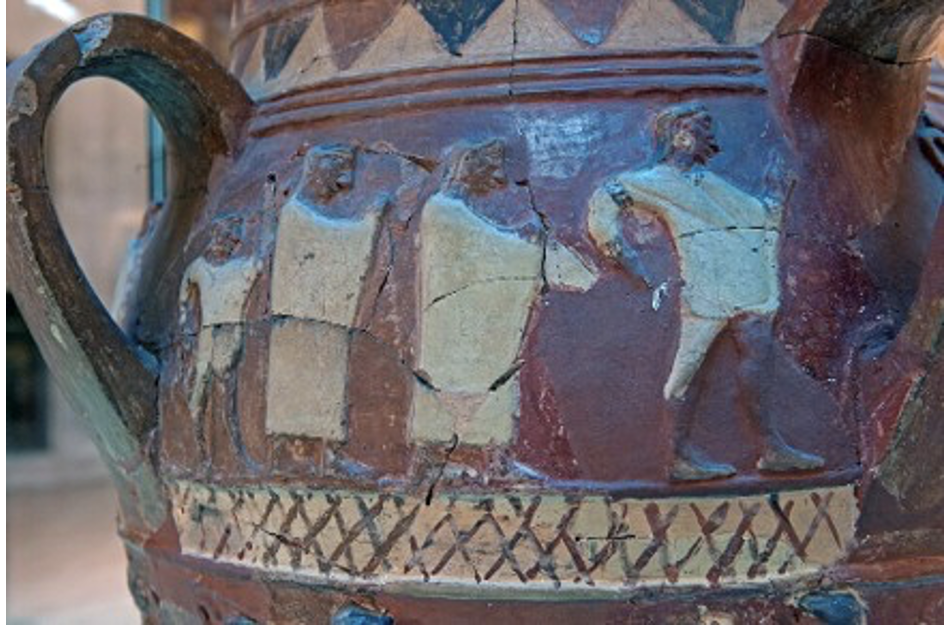
You are invited to our 2025-26 Seminar series on ‘Domestic Life in the Ancient World’. This will be an hybrid event on Thursday 2nd April, 2026 at 19.00 pm (Greece time), 17.00 pm (Ireland time), 12.00 pm (EST), by Professor Kostas Kopanias (Professor in the Archaeology of Anatolia and the Near East, National Kapodistrian University of Athens) on “Gender at Home and Before the Law: Domestic Roles in Hittite Legal Texts and the Homeric Epic Tradition."
Abstract
This talk explores how gender roles are defined in Hittite law, with a focus on family life and everyday social relations. It examines rules on marriage, divorce, inheritance, work, and sexual behaviour in order to show how men and women were positioned within the household and before the law. The evidence presents a nuanced picture. In some areas, such as homicide and bodily injury, men and women are treated in similar ways. In others, especially in labour and family matters, clear differences appear. The talk also highlights the importance of financial compensation as a central tool for resolving conflicts. Payments are used not only for economic matters but also for regulating social relationships, including marriage and its breakdown. Special attention will be given to how the law handles issues such as adultery, sexual offences, and mixed marriages between free persons and slaves. These cases reveal how responsibility is assigned and how the legal system balances control with a certain degree of flexibility. The role of the household, the authority of the husband, and the position of women within this structure will be discussed through specific examples from the texts. Overall, the talk shows that Hittite law reflects a society shaped by hierarchy and status, but also by practical solutions aimed at maintaining order and stability. Gender is an important factor, but it operates within a broader framework in which legal status, family structure, and social roles are equally decisive.
Further information:
The IIHSA Seminar Series for 2025–2026 will explore various aspects of household life in the ancient world, including labour and production, gender roles, childhood, food practices, and broader issues of social structure and negotiation across different periods and regions. Designed for graduate students and anyone interested in engaging deeply with a topic beyond the traditional lecture format, the series offers participants an opportunity to discuss and exchange ideas directly with experts in the field. Each seminar features a 30–40 minute presentation followed by an open discussion, co-led by the Assistant Director, to encourage active participation and dialogue. A brief bibliography is provided for those who wish to familiarize themselves with the seminar topic.
Bibliography
Bryce, T.R. 2002. Life and Society in the Hittite World. Oxford; New York: Oxford University Press.
Haase, R. 2003. “The Hittite Kingdom.” In A History of Ancient Near Eastern Law, edited by R. Westbrook. Leiden; Boston: Brill.
Hoffner, H.A. 1997. The Laws of the Hittites. A Critical Edition. Leiden; New York; Köln: Brill.
For online attendance please register here:
https://us06web.zoom.us/meeting/register/jASQ5mZBS0O29Sw9E2DDSw
To attend in person, please register by email: irishinstitutegr@gmail.com
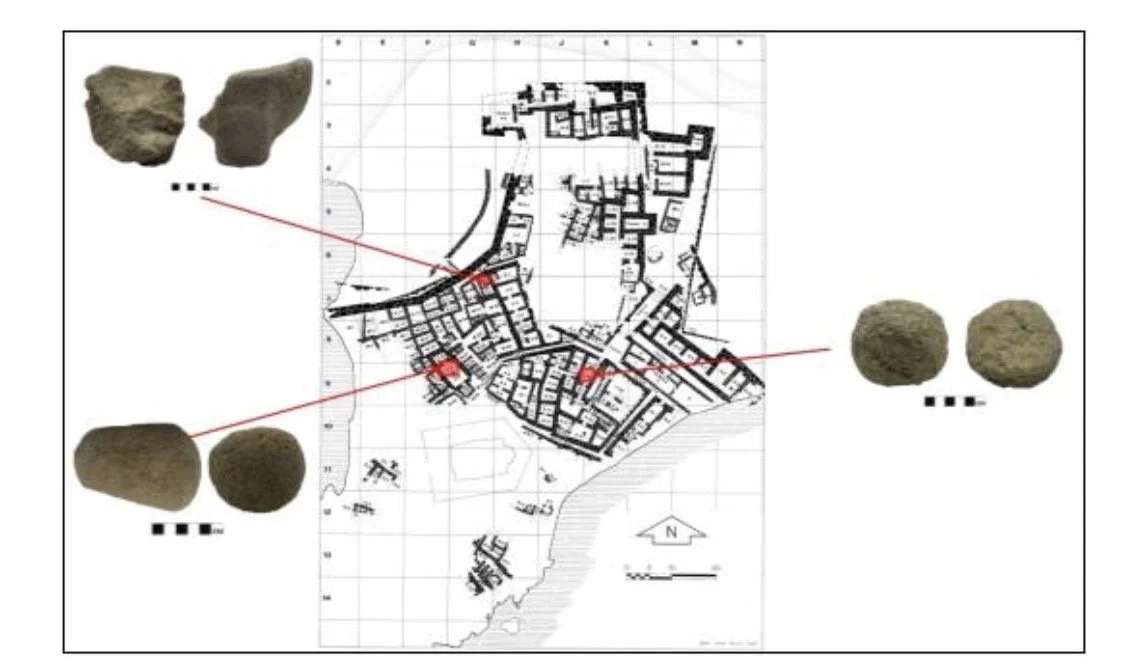
Seminar Series, Domestic Life in the Ancient World: Dr Jami R. Baxley Craig, “Food Processing in Prehistoric Greece: A Perspective from Ground Stone Tool Studies”
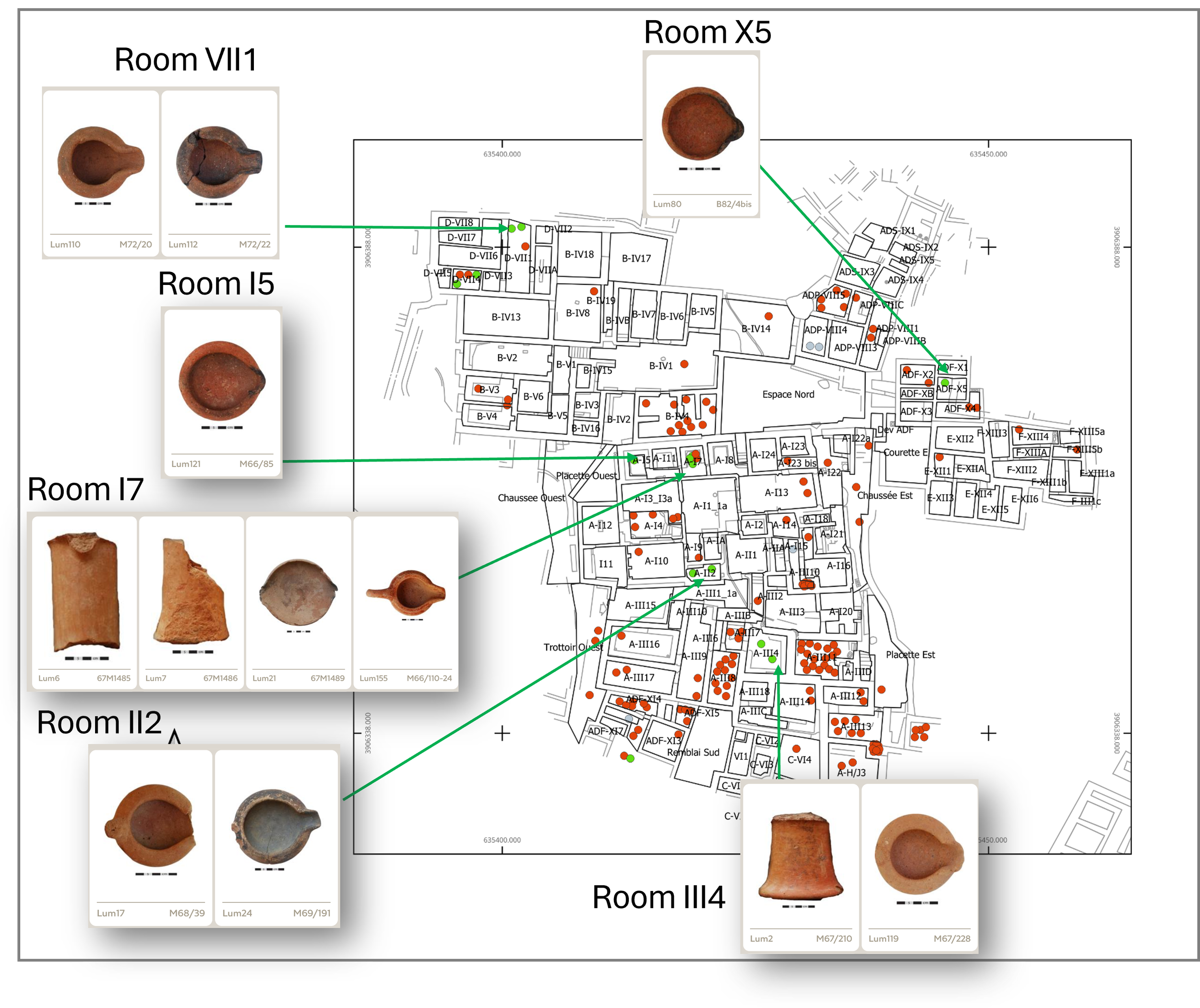
You are invited to our 2025-26 Seminar series on ‘Domestic Life in the Ancient World’. This will be an online event on Thursday 12th February, 2026 at 19.00 pm (Greece time), 17.00 pm (Ireland time), 12.00 pm (EST), by Dr Jami R. Baxley Craig (Florida State University), “Food Processing in Prehistoric Greece: A Perspective from Ground Stone Tool Studies”
Abstract: Ground stone tools is one of the largest and most prolific categories of objects that were involved in the production processes of many tasks essential to historic and prehistoric life across the world. The study of this artifact class can help us to answer questions concerning subsistence strategies, trade, craft production, and technology. In the Neolithic and BA Aegean, ground stone tool studies have been particularly integral to our understanding of prehistoric food-processing, especially of Neolithic Greece. Less emphasis, however, has been placed on their appearance at BA sites and their role in craft production activities. This seminar will explore the role of ground stone tools in the processing of foodstuffs and in craft production activities of the prehistoric Aegean using the BA town of Ayia Irini, Kea as a case study. I will especially stress the significant contribution that systematic studies of ground stone tools can provident only for our understanding of subsistence strategies, but also of other embedded social constructs and processes of the prehistoric Aegean.
Further information:
The IIHSA Seminar Series for 2025–2026 will explore various aspects of household life in the ancient world, including labour and production, gender roles, childhood, food practices, and broader issues of social structure and negotiation across different periods and regions. Designed for graduate students and anyone interested in engaging deeply with a topic beyond the traditional lecture format, the series offers participants an opportunity to discuss and exchange ideas directly with experts in the field. Each seminar features a 30–40 minute presentation followed by an open discussion, co-led by the Assistant Director, to encourage active participation and dialogue. A brief bibliography is provided for those who wish to familiarize themselves with the seminar topic.
Bibliography
Adams, J.L. 2013. Ground Stone Analysis. A Technological Approach. Vol. 2.University of Utah Press.
Baxley Craig, J.R. 2025. “Ground Stone Tools Across Houses: A Preliminary Spatial and Contextual Analysis from Ayia Irini, Kea.” JAS: Reports: Anthropological Insights into Ground Stone Tool Technology.
Bekiaris, T., D. Chondrou, I. Ninou, and S.M. Valamoti. 2020. “Food-Processing Ground Stone Tools in the Greek Neolithic and Bronze Age. A Synthesis of the Published Data.” Journal of Greek Archaeology5:135–95.
Georgiadis, M. 2017. “A Synthesis of the Neolithic and Early Bronze Age Ground Stone Tools from the Dodecanese.” In The Archaeological Work in the Aegean Islands, 17–30. Mytilene: Hellenic Ministry of Culture and Tourism.
Rowan, Y.M., and J.R. Ebeling, eds. 2008. New Approaches to Old Stones: Recent Studies of Ground Stone Artifacts. Approaches to Anthropological Archaeology. London; Oakville: Equinox Publishing Ltd.
For online attendance please register here: https://us06web.zoom.us/meeting/register/pcuxVCicSyynlf-2jW5T6A
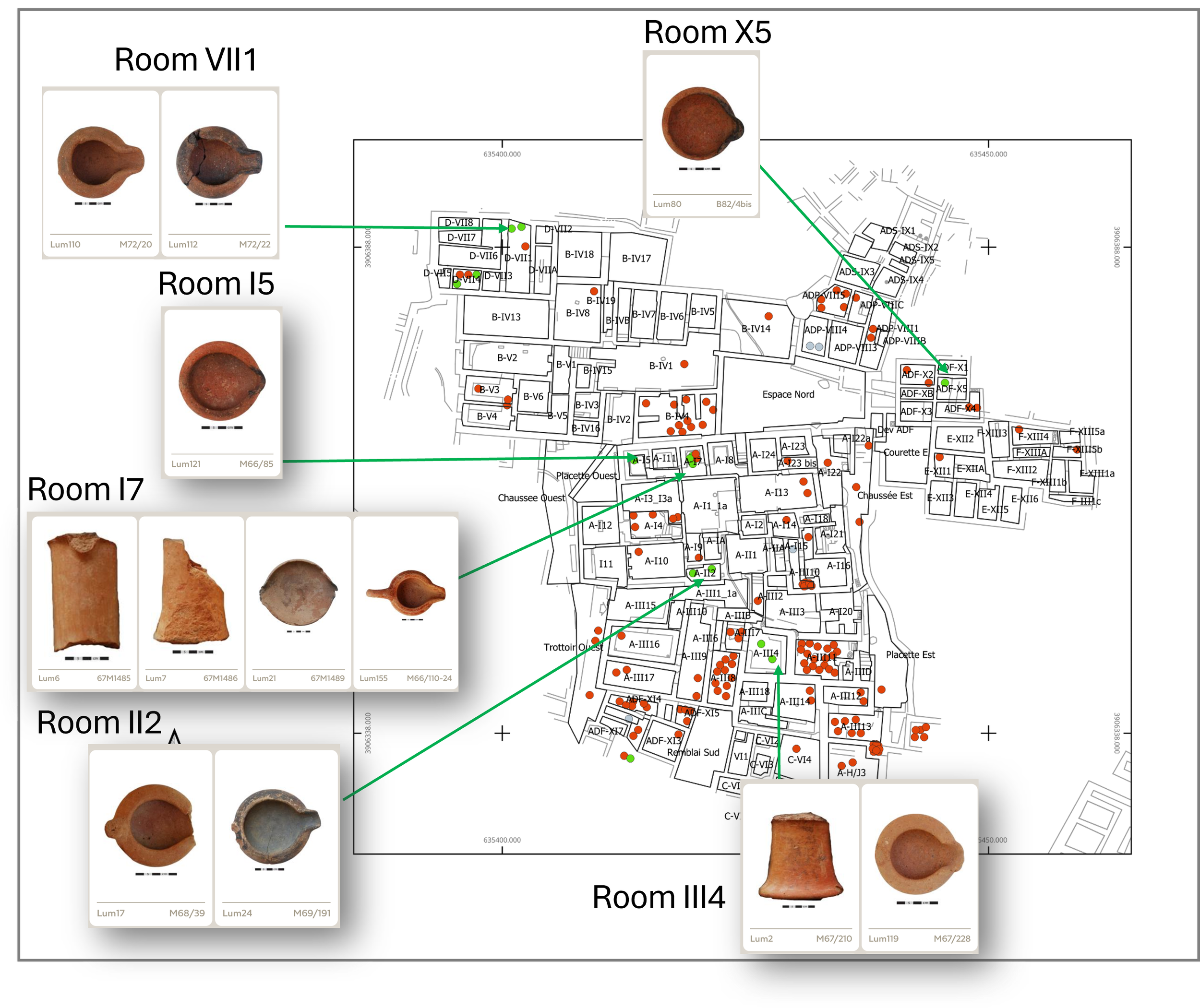
Seminar Series, Domestic Life in the Ancient World: Dr Bastien Rueff, When fire-related utensils reveal the uses of domestic spaces: An Aegean Bronze Age perspective
You are invited to our 2025-26 Seminar series on Domestic Life in the Ancient World. his will be a hybrid event on Thursday 4th December, 2025 at 19.00 pm (Greece time), 17.00 pm (Ireland time), 12.00 pm (EST), by Dr Bastien Rueff, “When fire-related utensils reveal the uses of domestic spaces: An Aegean Bronze Age perspective”. Dr Rueff is a Scientific Member of the French School at Athens.
Abstract: This presentation centres on demonstrating how fire-related utensils can illuminate the uses of domestic spaces in the Aegean Bronze Age. The term fire-related utensils refers to mobile objects, mostly of clay, used for lighting, heating, and perfuming, such as lamps, incense burners, scuttles, braziers, mobile hearths, and fireboxes. These artefacts are considered together as a category because their production appears to have increased with the rise of a palatial system in Crete and the development of urban environments at the beginning of the 2nd millennium BCE. The seminar will focus on two case studies: first, lamps and the question of illumination; and second, fireboxes and the issue of perfume production in domestic contexts. The methodology employed combines the direct study of archaeological material from settlements in Crete and Turkey with contextual and spatial analyses, experimental approaches, lipid analysis, and 3D reconstructions. Through these examples, I aim to shed light on the concept of lived space and to address broader questions, such as how to delineate domestic and craft spaces.
Further information:
The IIHSA Seminar Series for 2025–2026 will explore various aspects of household life in the ancient world, including labour and production, gender roles, childhood, food practices, and broader issues of social structure and negotiation across different periods and regions. Designed for graduate students and anyone interested in engaging deeply with a topic beyond the traditional lecture format, the series offers participants an opportunity to discuss and exchange ideas directly with experts in the field. Each seminar features a 30–40 minute presentation followed by an open discussion, co-led by the Assistant Director, to encourage active participation and dialogue. A brief bibliography is provided for those who wish to familiarize themselves with the seminar topic.
Bibliography
· Bibliography
· Rueff, B. 2019. The organization of space and time in the Quartier Mu of Malia (Crete, Bronze Age, 3200-1100 BC), in light of lamps. Journal of Energy History / Revue d’Histoire de l’Énergie 2. https://doi.org/10.3917/jehrhe.002.0001b.
· Rueff, B. 2024. Macroscopic identification of Minoan lamps’ fuels. An experimental use-alteration and ultraviolet analysis. Journal of Archaeological Science: Reports 54. https://www.sciencedirect.com/science/article/pii/S2352409X24000336. https://doi.org/10.1016/j.jasrep.2024.104405.
· Rueff, B., P. Debels, R. Vargiolu, H. Zahouani & H. Procopiou. 2021. Reading clay vases surfaces: characterization of surface treatments towards functional identification. Journal of Archaeological Science: Reports 38. https://doi.org/10.1016/j.jasrep.2021.103021.
· Rueff, B., A. Pinto, K. Messini & H. Procopiou. 2023. Senses and Activities: A Virtual Reconstruction of the Potter’s Workshop and the North Area of Quartier Mu at Malia (c. 1800-1700 BC). Studies in Digital Heritage 7: 91–112. https://doi.org/10.14434/sdh.v7i2.36158.
· Vandevelde, S., M.Á. Medina-Alcaide, B. Rueff & C. Ferrier. 2024. From fire to light: Illuminating the archaeological past. Journal of Archaeological Science: Reports 55: 104511. https://doi.org/10.1016/j.jasrep.2024.104511.
For online attendance please register here:
https://us06web.zoom.us/meeting/register/uA5WKv87QZW7OeEc0edd9g
To attend in person, please register by email: irishinstitutegr@gmail.com

Seminar Series, Domestic Life in the Ancient World: Dr Kyriaki Tsirtsi, ‘Archaeobotanical insights into everyday life in Classical and Hellenistic Sikyon’

You are invited to our 2025-26 Seminar series on Domestic Life in the Ancient World. This will be a hybrid event on Thursday November 20, 2025 at 7.00 pm (Greek time)/ 5.00 pm (Irish time) / 12.00 (EST) by Dr Kyriaki Tsirtsi on ‘Archaeobotanical insights into everyday life in Classical and Hellenistic Sikyon’. Dr Tsirtsi is a Post-Doctoral Research Fellow in Archaeobotany at the M.H. Wiener Laboratory for Archaeological Science, American School of Classical Studies at Athens.
Abstract: Daily activities related to food production, procurement, storage, and cooking reflect multiple scales of human social organization - from individual household decisions to broader agricultural regimes and ancient economic models. These dynamics can be effectively illuminated through the study of archaeobotanical remains. This paper presents a comprehensive archaeobotanical investigation at the 1st millennium BCE site of Sikyon, aimed at reconstructing aspects of everyday life during the Classical and Hellenistic periods. Through the systematic analysis of both macrobotanical and microbotanical remains recovered from well-contextualized domestic and workshop-related contexts, the study examines patterns of plant exploitation, including acquisition, processing, and consumption. Particular emphasis is placed on the spatial distribution of botanical evidence enabling the reconstruction of intra-household and craft-related organization. By integrating macro- and micro-scale botanical datasets, this research contributes to a deeper understanding of agricultural practices, urban/ agrarian economies, and culinary patterns, while it sheds light on the role of plant-based resources in shaping urban lifeways and socio-economic structures in the north-eastern Peloponnese.
Further information:
The IIHSA Seminar Series for 2025–2026 will explore various aspects of household life in the ancient world, including labour and production, gender roles, childhood, food practices, and broader issues of social structure and negotiation across different periods and regions. Designed for graduate students and anyone interested in engaging deeply with a topic beyond the traditional lecture format, the series offers participants an opportunity to discuss and exchange ideas directly with experts in the field. Each seminar features a 30–40 minute presentation followed by an open discussion, co-led by the Assistant Director, to encourage active participation and dialogue. A brief bibliography is provided for those who wish to familiarize themselves with the seminar topic.
Bibliography
· Douché, C., Tsirtsi, K. and Margaritis, E. 2021. ‘What's new during the 1st millennium BCE in Greece? Archaeobotanical results from Olynthos and Sikyon’. Journal of Archaeological Science, Reports. Vol. 36, 102782.
· Maltas, T., Tsirtsi, K., and Margaritis, E. 2023. ‘Archaeobotanical remains: sampling and processing in the field’. Chapter in edited volume: in E. Margaritis, A. Oikonomou, E. Nikita and T. Rehren (eds.). Field Sampling for Laboratory Analysis in Archaeology. The Cyprus Institute. 2-11.
· Tsirtsi, K., Henkel, C., Garcia-Granero, J-J., Alphas, E., Pilides, D. and Margaritis, E. 2024. ‘Bringing together macro- and micro-botanical remains in Bronze Age Cyprus: The cases of Alambra-Kato Lakkos and Agios Sozomenos-Ampelia’. Journal of Archaeological Science: Reports. Vol. 56, 104554.
· Tsirtsi, K. 2022. Agricultural and Domestic Practices in Classical Sikyon: Evidence from the Archaeobotanical Remains and Utilitarian Pots (Unpublished PhD thesis). The Cyprus Institute. Nicosia. Cyprus
· Zohary, D., Hopf, M. & Weiss, E. 2012. Domestication of Plants in the Old World. Fourth edition. Oxford University Press.
For online attendance please register here:
https://us06web.zoom.us/meeting/register/1IZ9bpqqSLeI5-1YK7YeWA
To attend in person, please register by email: irishinstitutegr@gmail.com

Seminar Series, Domestic Life in the Ancient World: Dr. Anastasia Dimoula, Cooking practices & ceramic vessels in northern Greece during the Neolithic & Bronze Age periods (7th-2nd mill. BCE)

You are invited to our 2025-26 Seminar series on Domestic Life in the Ancient World. This will be a hybrid event on Thursday October 23rd at 7.00 pm (Greek time)/ 5.00 pm (Irish time) / 12.00 (EST) by Dr. Anastasia Dimoula (Aristotle University of Thessaloniki), “Cooking practices and ceramic vessels in northern Greece during the Neolithic and Bronze Age periods (7th-2nd millennium BCE)”
Abstract: Ceramic vessels used in cooking practices constitute an effective proxy for exploring change and variability in the technologies and perceptions of foodways. Within the ERC project PlantCult (PI: Prof. S.M. Valamoti),a holistic approach to cooking pottery has been applied, integrating typological study, technological characterisation, use-wear and content analyses, along with experimental investigations. The case study presented here focuses on prehistoric Northern Greece, where systematically examined contexts have provided a comprehensive image of prehistoric everyday and special-occasion activities. The results indicate that cooking vessels share a set of technological attributes linked to thermal performance and use, yet they also exhibit marked variability through time and across regions. This variability reflects intersecting cultural affiliations and context-specific choices, shaped by environmental features, regional factors, as well as ceramic and culinary traditions.
Further information:
The IIHSA Seminar Series for 2025–2026 will explore various aspects of household life in the ancient world, including labour and production, gender roles, childhood, food practices, and broader issues of social structure and negotiation across different periods and regions. Designed for graduate students and anyone interested in engaging deeply with a topic beyond the traditional lecture format, the series offers participants an opportunity to discuss and exchange ideas directly with experts in the field. Each seminar features a 30–40 minute presentation followed by an open discussion, co-led by the Assistant Director, to encourage active participation and dialogue. A brief bibliography is provided for those who wish to familiarize themselves with the seminar topic.
Bibliography
· Dimoula, A., Z. Tsirtsoni, P. Yiouni, I. Stagkidis, M. Ntinou, S. Prevost-Dermarkar, E.Papadopoulou, & S.Μ.Valamoti. (2020) “Experimental Investigation of Ceramic Technology and Plant Food Cooking in Neolithic Northern Greece.” STAR: Science & Technology of Archaeological Research 5 (2): 269–286.
· Dimoula, A., S. Koulidou, Z. Tsirtsoni, E. Standall, O. E. Craig, and S. M. Valamoti. (2022) “Fusion Cuisine in the Shadow of Mount Olympus: An Integrated Study of Middle and Late Bronze Age Cooking Pots.” In Cooking with Plants in Ancient Europe and Beyond: Interdisciplinary Approaches to the Archaeology of Plant Foods, edited by Soultana Maria Valamoti, Anastasia Dimoula, and Maria Ntinou, 257–276. Oxford and Philadelphia: Oxbow Books.
· Lis, B. (2017) “Mycenaean Cooking Pots: Attempt at an Interregional Comparison.” In Ceramics, Cuisine and Culture: The Archaeology and Science of Kitchen Pottery in the Ancient Mediterranean World, edited by Michela Spataro and Alexandra Villing, 155–165. Oxford and Philadelphia: Oxbow Books.
· Morrison, J. E., C. Sofianou, T. M. Brogan, J. Alyounis, and D. Mylona. (2015) “Cooking Up New Perspectives for Late Minoan IB Domestic Activities: An Experimental Approach to Understanding the Possibilities and Probabilities of Using Ancient Cooking Pots.” In Ceramics, Cuisine and Culture: The Archaeology and Science of Kitchen Pottery in the Ancient Mediterranean World, edited by Michela Spataro and Alexandra Villing.
· Valamoti, S. M., A. Dimoula, and M. Ntinou, eds. (2022) Cooking with Plants in Ancient Europe and Beyond: Interdisciplinary Approaches to the Archaeology of Plant Foods.
For online attendance please register here:
https://us06web.zoom.us/meeting/register/dLbwEHwsShWkE92cLhVspQ
To attend in person, please register by email: irishinstitutegr@gmail.com