IIHSA Events

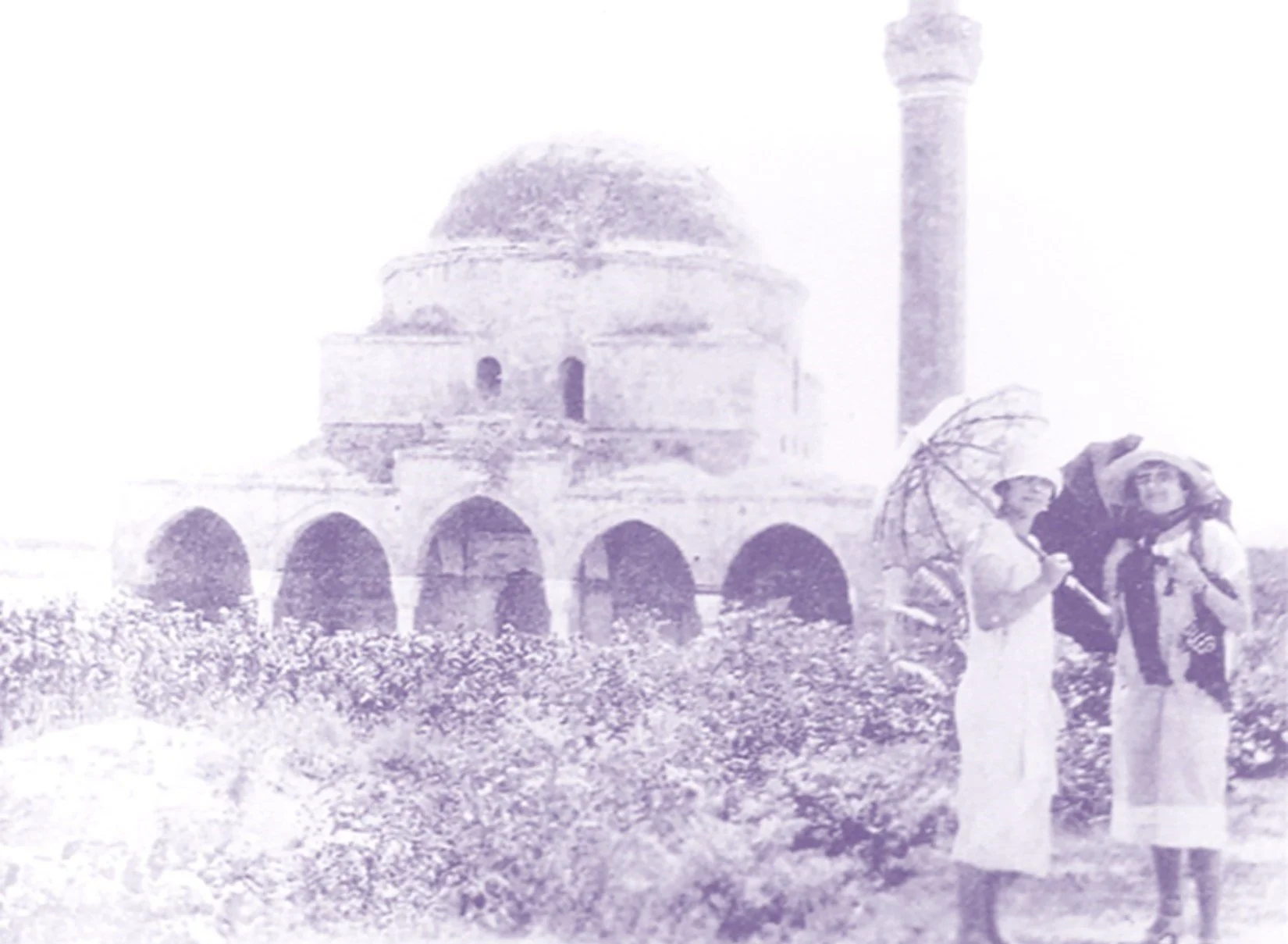
Rethinking “Ottoman heritage”: memory, space and politics in the afterlives of the Ottoman past (Academic Workshop)
Rethinking “Ottoman heritage” memory, space and politics in the afterlives of the Ottoman past (Academic Workshop)
Organised by Marilena Pateraki (Assistant Director, Irish Institute of Hellenic Studies at Athens)
& Elias Kolovos (Research Director, Institute of Historical Studies, National Hellenic Research Foundation)
With the organisational partnership of The Hafız Ahmed Agha & Ahmed Fethi Pasha Foundation
10.00 | Opening - Welcome
10.00 – 10. 20 Marilena Pateraki, Assistant Director, IIHSA: Making “Ottoman Heritage”: Towards New Conceptual and Methodological Perspectives
10.20 | Methodological Questions in Studying the “Ottoman heritage” Moderator: Elias Kolovos
10.20-10.40 Faidon Moudopoulos - Athanasiou, MSCA Postdoctoral Researcher, Barcelona Supercomputing Center: Archaeological Ethnography as a Tool for Reassessing and Reinterpreting Spaces, Ruins, and Events of the Ottoman Period
10.40 – 11.00 Melis Cankara, Architect, Institute of Historical Studies - National Hellenic Research Foundation: Neither With nor Without It: Archival Potentials and Limits of Studying the Ottoman Heritage in Rethymno, Crete
11.00 – 11.30 Discussion
11.30| Coffee break
11.45 | Post-Ottoman Spatial Transformations and Negotiating the Ottoman Past
Moderator: Prof. Kalliopi Amygdalou, National Technical University of Athens
11.45 – 12.05 Dilek Özkan-Pantazis, Institute of Historical Studies - National Hellenic Research Foundation: “Borders That Disappeared, Buildings That Remained: Ottoman Border Stations and Their Afterlives”
12.05 – 12.25 Giorgos Koumaridis, Hellenic Literary and Historical Archive - National Bank of Greece Cultural Foundation, Thessaloniki / PhD Candidate, University of West Attica: Interwar Thessaloniki as a Transition Case: Negations and Legacies of a Very Recent Ottoman Past
12.25 – 12.55 Discussion
13.00 – 14.30 | Lunch break
14.30 | Architecture as Repository and Embodiment of Socio-Cultural Relations
Moderator: Prof. Kalliopi Amygdalou, National Technical University of Athens
14.30 – 14.50 Maximilian Hartmuth, Department of Art History, University of Vienna: Greece’s Ottoman Heritages: The Architecture of Kavala as a Material Matrix of Historical Relations
14.50 – 15.10 Gabriel Fowden, Benaki Museum of Islamic Art: The Tzisdarakis Mosque in Athens: Diachronic Forms, Functions, Reuses and Local Variations on Ottoman Architecture
15.10 – 15. 40 Discussion
16.00 | Official & Informal Heritage Regimes: Materiality, Memory, Reinterpretation
Moderator: Marilena Pateraki
16.00 - 16.20 Alexandra Koumpouli, 2025-2026 Schwartz Fellow for Research on Urban Architecture, ASCSA: Ottoman Heritage without Monuments: A Microhistory of Memory and Ordinary Spaces in Borderland Communities of Epirus
16.20 - 16.40 Jeremy Walton, Department of Cultural Studies, University of Rijeka: Post-Ottoman Cemeteries between Heritagisation and Heterotopia: On Çanakkale, Gül Baba, and Bülbülderesi
16.40 - 17.00 Elias Kolovos, Institute of Historical Studies, National Hellenic Research Foundation: The Hafız Ahmed Agha Foundation as a Transnational Mediterranean Foundation
17.00 – 17.30 Discussion
17.30| Coffee break
17.45 | Closing Session
17.45 – 18.00 Elias Kolovos & Marilena Pateraki: Closing Remarks
18.00 – 19.30 | Concluding Discussion
Workshop Concept
This workshop explores new theoretical and methodological approaches to the study of “Ottoman heritage”, with particular attention to the historicity of its formation as a conceptual, performative, and material field. Rather than treating “Ottoman heritage” as a fixed analytical category, it approaches it as the outcome of complex, and often contradictory, processes of official and informal heritage-making.
Recent advances in the historiography of the Ottoman period, as well as in the study of the transition from imperial to nation-state spatial orders, invite a reconsideration of how institutional and cultural definitions of collective identity and otherness are produced, and how state institutions are socially negotiated within processes of collective subjectivation.
These new perspectives encourage a rethinking of how dominant representations of the past are established in the public sphere and embedded in space. At the same time, they highlight how the multiple meanings of the Ottoman past are mediated through diverse social stakes emerging within changing functional, proprietary, and symbolic geographies.
From this perspective, the workshop brings new historiographical debates into dialogue with approaches from critical heritage studies, critical geography, the history of architecture and art, and social anthropology. Moving beyond generalised narratives of the “disappearance” of Ottoman architecture in Greece, it aims to foreground questions of local complexity, administrative contradictions, and a heterogeneous spectrum of practices oriented towards marginalisation, adaptation, and selective retention - rarely absolute rejection. Rather than linear interpretations that oppose an initial phase of total dismissal with a later, morally framed institutional “restoration”, the discussion will instead highlight the complex processes of re-signification, reuse, and erasure surrounding Ottoman-era architectural traces, as well as the dialectical relationship between ideological representations and material stakes in the management of a “difficult” past. Engagement with the enduring materiality of Ottoman space is thus approached as a kaleidoscopic interplay of dismantling and (re)appropriation.
Within this framework, the workshop aims to explore the modalities through which national ideology becomes spatially entrenched and how it intersects with diverse social claims, subjectivations, and conflicts. It will further examine the role of socio-spatial transformations across multiple scales in shaping interpretive and management frameworks, as well as the entanglement of built materiality with collective representations, sensory ambiences, and diverse forms of cultural production. It will thus address the complexities of memory, oblivion, and spatial practice within shifting social formations and regimes of sovereignty, while considering the polysemy of “Ottoman heritage” across socio-spatial and cultural contexts, within a long-term perspective attentive to the experiences and actions of marginalised or non-dominant populations from the late imperial period to contemporary migration contexts
To attend, please register by email: irishinstitutegr@gmail.com